
Gesprek I The Banality of Evil Revisited
Onderdeel van de reeks Hannah Arendt Tage
| Veranstaltung des Duitsland Instituut Amsterdam |
|
|---|---|
| Datum: | Mittwoch 14 Januar 2026 um 19:00 Uhr |
| Ort: | Goethe-Institut Niederlande, Herengracht 470, Amsterdam |
| Information: | Voertaal: Engels. Aanmelden |
| Zugang: | Gratis |
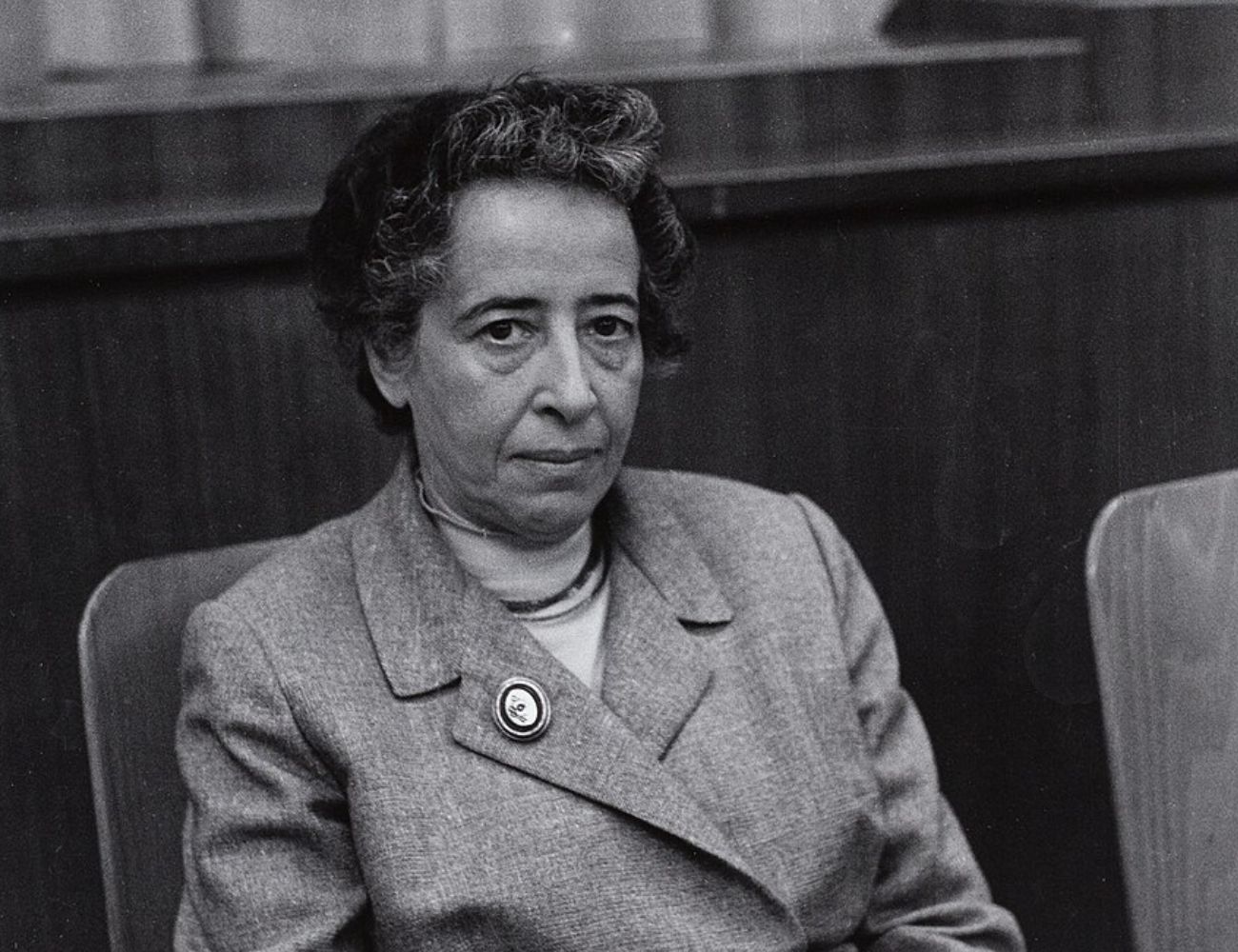 © Münchner Stadtmuseum, Sammlung Fotografie
In 1961 reisde Hannah Arendt naar Jeruzalem om het proces tegen Adolf Eichmann bij te wonen. Ter gelegenheid van haar 50e sterfdag onderzoeken we hoe haar idee van de 'banaliteit van het kwaad' vandaag kan helpen hedendaagse conflicten en complexe maatschappelijke structuren te begrijpen. Aan de hand van lezingen en gesprekken wordt ook de discussie over Eichmann als zogenaamde 'Schreibtischtäter' belicht. Voertaal: Engels
On the 50th anniversary of Hannah Arendt's death, we take a new look at her famous concept of the banality of evil. In 1961, Hannah Arendt traveled to Jerusalem to follow the trial of Nazi criminal Adolf Eichmann. Back in New York, she wrote down her thoughts in a five-part series of essays that appeared in The New Yorker, followed by the book Eichmann in Jerusalem: A Report on the Banality of Evil.
Where do we look away today, caught up in administrative apparatuses and complex structures, and what guilt do we bear? Does Arendt's banality of evil help us understand today's conflicts and genocides—or does it belong in the history books of the Cold War? Based on the debate surrounding Eichmann's image as a perpetrator, a so-called “desk criminal,” and more recent research, we will discuss whether Arendt's idea still holds water or whether new interpretations are needed.
Look forward to lectures and discussions with Alette Smeulers, professor of international crimes, and Uğur Ümit Üngör, professor of Holocaust and genocide studies. The event will be moderated by historian Hanco Jürgens (DIA).
Aanmelden via EventBrite.
I.s.m. het Goethe-Institut Niederlande